Wednesday, February 20, 2013

Australasian Crested Grebes, Lake Lyndon

LAKE LYNDON | CANTERBURY

For those who missed seeing some of my 'Wild Aotearoa' exhibition at the Green Room Cafe it is now showing at the Restaurant@Rossendale. Rossendale is a beautiful winery situated just outside of Christchurch. So if you want to go and have a nosy and one of their famous Rieslings go and have a look!  

Rossendale Winery: 136 Old Tai Tapu Road Christchurch 8025    |    http://www.rossendale.co.nz/  

It was love at first sight when I first laid eyes on the magnificently handsome Australasian Crested Grebes or kāmana as they are known in Maori. Kāmana have captivated and intrigued me for the last few years. These birds belong to an ancient order of diving water birds found on every continent in the world. They are renowned for their mating displays and the way young grebes ride among plumage on the back of their swimming parents. Three of the 22 species in this order have become extinct in the last 30 years, and unfortunately Australasian crested grebes are endangered here in New Zealand with approximately 300-400 birds remaining. 

|   Australasian Crested Grebe Nest   |   Lake Lyndon   |   18mm   |   1/320sec   |   f/13   |   ISO500   |   

When I heard there was a pair of Australasian Crested Grebes nesting at Lake Lyndon, in the Canterbury high country I couldn't help but have a look. Lake Lyndon is a relatively small alpine lake and has little to no substantial tree cover except for a few stunted willows, this makes finding the birds relatively easy. I took a trip up to the Lake one Saturday afternoon in hope of having a 'reccy' and locating the nest. The lake was quite busy due to weekend activities and finding the birds proved extremely difficult... they weren't in their usual nesting locations and I began to wonder if I was I too late? Had the nest failed? Were the birds laying low due to the increased human activity on the lake? As the sun set behind the mountains I decided to give up the search and have some dinner... I pulled up to the quiet side of the lake and set up my camp stove; as the water was boiling I noticed some movement in one of the small willows right in front of where I was sitting - I had managed to park within 50 metres of this interesting grebe's nest!

What was particularly surprising was that this nesting pair had already successfully brought up a healthy juvenile and had decided to nest again. It is not uncommon for grebes to re-nest after a failed nest attempt, but to re-nest while looking after a rapidly growing youngster was unusual, in fact I haven't heard of this behaviour before. Furthermore, it was helping its parents build the new nest for its younger siblings. WOW! It would watch its parent dive to collect weeds and twigs to place on the nest, and then copy its parents by placing small bits of weed onto the nest itself. What an amazing privilege to watch this interesting learning behaviour in front of my very eyes! Unfortunately the light was now well behind the mountains to the West and photography was out of the question!
 
|   Australasian Grebe with Juvenile in the Morning fog   |   Lake Lyndon   |   390mm   |   1/400sec   |   f/7.1   |   ISO640   |

I had to get back up there to see if I could photograph these amazing birds! I was able to free up a couple of days around Waitangi Day. I drove up to the lake after work and spent an extremely disrupted sleep in the back of the car due to high winds and cool high country temperatures - I woke to the sound of a couple of angry skylarks chasing a sly stoat around outside the car. Rain, mist and howling winds made for less than desirable photographic conditions and what was worse was that one of the adult birds and the juvenile were nowhere to be seen. I spent the day watching the nest from a distance hoping to see the two birds return and relieve the poor incubating parent who looked as if it had a rougher night than me. The day slowly disappeared and still no sign of the missing birds - I was beginning to lose hope as I had seen a grebe predated on this lake a couple of years back and began to wonder if the stoat had got to one or both of the birds. At around 6pm that evening I was elated when I saw from a distance two grebes returning to the nesting site - yes they had finally returned after perhaps spending the whole day sheltering from the strong winds... I imagined how happy the incubating parent would have been to see these two return. Once back, there was a little socialising and some nesting building before a change of incubating duties...phew! The sky was dark and the wind still made it difficult to get any decent shots so I happily watched the grebe family while enjoying a cuppa - I would hopefully get some better weather and some photo opportunities tomorrow.
 
I awoke early to a still, quiet, foggy morning; the sun had not yet broken the horizon and I was relieved to see all three birds around the nesting site. As the light started to appear through the fog I was able to get to work capturing the grebes in the mist (above). The fog, light and calm conditions made it possible to create some interesting images of the nesting (below).
 
|   Australasian Crested Grebe's Nest   |   18mm   |   1/80sec   |   f/11   |   ISO640   |

The sun began to slowly burn off the fog, creating one of the most beautiful high country mornings I have ever experienced! Soon there was enough light to capture the grebes carrying all sorts of interesting nesting materials (below).
 
|   Australasian Crested Grebe with nesting material   |   360mm   |   1/640sec   |   f/7.1   |   ISO400   | 
|   Australasian Crested Grebe with nesting material   |    175mm   |   1/640sec   |   f/7.1   |   ISO400   |
|   Juvenile Australasian Crested Grebe stretching    |    420mm   |   1/1000sec   |   f/7.1   |   ISO400   | 

As the sun rose and the temperature increased the fog totally lifted and revealed a beautiful high country day. The juvenile grebe was extremely inquisitive and happily preened, hassled its busy parents, stretched (above) and played in the clean and cool alpine waters of Lake Lyndon. Australasian Crested Grebes' legs sit well back on their bodies which make them extremely strong swimmers. As a result the grebes spend their entire lives on the water and they are extremely awkward on land. I spent the afternoon photographing the grebe family -what a wonderful way to spend Waitangi Day. Even though the trip had started off a little rough these special moments made the trip worthwhile. NZ scaups, black-backed gulls, shags, pied stilts, south island pied oystercatchers (SIPOs), banded dotterels, skylarks, NZ pipits, and harriers also resided on the Lake. I managed to snap this SIPO (below) as it had a lazy stretch on Waitangi Day!
 
|   South Island Pied Oystercatcher Stretching  |   390mm   |   1/640sec   |   f/7.1   |   ISO500   |
 
|   Australasian Crested Grebe Eggs   |   Lake Lyndon   |
Last Friday morning I returned to Lake Lyndon with a few friends in hope of photographing the grebes with their newly hatched chicks. We arrived up at the Lake to find three cold abandoned eggs! It is always upsetting as a photographer and conservationist to witness an abandoned nest, especially when you watch firsthand the effort that the parents put into building and incubating. Unfortunately this is not an uncommon occurrence in nesting grebes. In fact an extremely high percentage of nests failed this year in Lake Pearson and Lake Lyndon! Strong winds, choppy waves  and rising lake levels can often flood grebe's nests and wash generated by motorised watercraft can also swamp nests and destroy eggs. Noise and predators can scare adult birds off their nests and leave chicks exposed to the cold or predators. The water levels in the Lake were much lower than the week before and had left the nest vulnerable to land based predators. We wondered whether over inquisitive people or animals such as stoats, cats or raptors had scared the adults off the nest.
 
Thanks for stopping by! A previous Australasian Grebe Blog can be viewed here: http://jonathanharrodphotography.blogspot.co.nz/2011/02/australasian-crested-grebes.html 

Sunday, January 27, 2013

AUSTRALIA 2012/2013 

The diversity and colours of Australia's wildlife makes Australia an exciting place to photograph. I had the opportunity to spend some time over Christmas in Australia visiting family and enjoying some rest and relaxation - which involved some photography of course!!!

My grandparents live approximately 1 hr south of Sydney, close to some wonderful birding opportunities! One great birding spot is Lake Illawarra, I was amazed at the amount of bird-life on the lake and enjoyed photographing many species for the first time. I always enjoy flicking through the Australian bird book and identifying birds for the first time...

The first species I photographed were great egrets or white herons as they are known in NZ. I love photographing these elegant birds, as they stalk their prey with grace and finesse and strike with pin point accuracy.

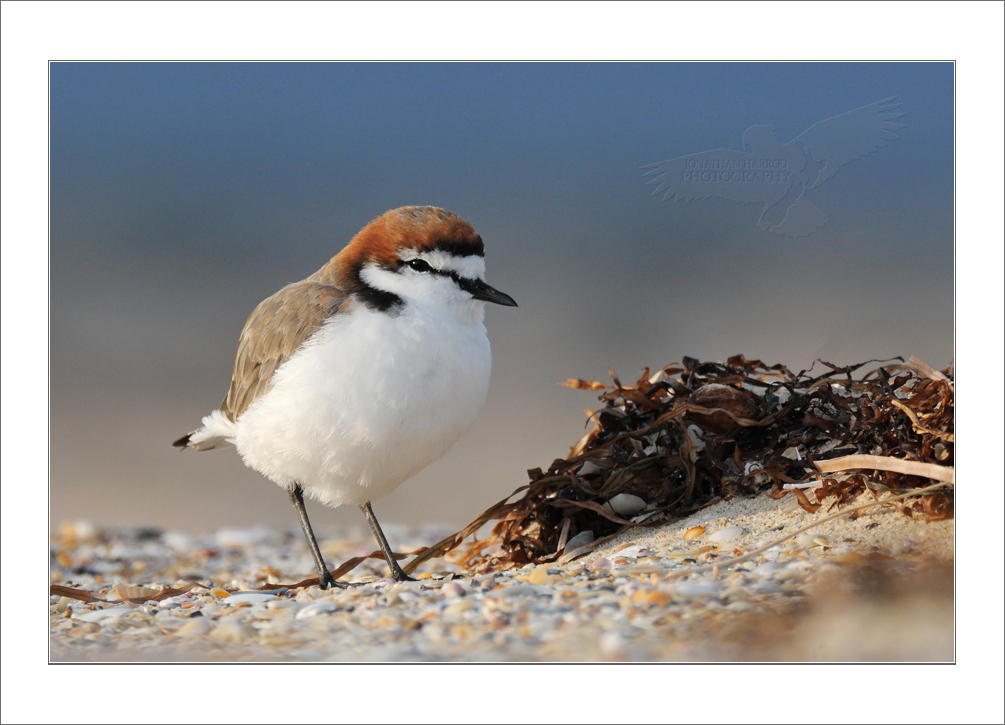
One particular species I wanted to photograph was the red-capped plover/dotterel, a beautiful little shorebird endemic to Australia. I found a small number roosting at the entrance to the lake thanks to some information from Charles Dove a local birder/bird photographer and member of the Illawarra bird observers club. I loved how the dried kelp mirrored the lovely auburn colours on the bird's cap so I tried to incorporate this in the photograph below.


I made a point to carry my camera wherever I went in case a photographic opportunity showed itself. I was pleasantly surprised when I found an eastern yellow breasted robin's nest on a family trip to the beautiful Hyams Beach, an area which seemed to have a huge abundance of wildlife. I had a great time watching and photographing the robin family for the afternoon as the adults fed their three hungry chicks. Carrying the camera really paid off!!


This beautiful little nest is made from bark shreds and spiders web, lined with grass and leaves, adorned with bark, lichen and moss. The eastern yellow robin is such a stunning little bird with a wonderful bright yellow breast, and it's soft squealing whistles are a welcome sound in the bush.


WOW, a new year! I'm still left wondering where 2012 got to, it seems like the year has flown by so fast. I don't know about you, but I find this time of year a good time to reflect on a year past and plan for the year ahead. What are my goals and aspirations for 2013? There may be many goals involving your employment, fitness, family, house, holidays... but have you set yourselves any plans for your photography? Have you set any photography goals or aspirations?

"Think first about the photo you want to capture, if you shoot first and think later that's a snapshot not a photo" (Frans Lanting). I really like this quote and think it rings  particularly true for wildlife photography! I'm sure that many, if not all of you have envisaged elaborate photographs in your head that you would love to capture... I have one had one in my head of a New Zealand kingfisher diving into the water after it's prey for some time now.

I think it is extremely beneficial for us as photographers to set ourselves achievable goals or projects... perhaps capturing a particular species, behaviour or location. I think it helps to be pro-active photographers, creating that special moment, not just hoping that it will come along! I know that wildlife in particular can be often unpredictable, and sometimes its very much about being in the right place at the right time, although there are steps that can greatly increase your chances of being there to capture that special moment when it happens. Things like researching your subject, asking yourself questions like, when is my subject most active?, how do the tides affect my subject or it's location?, what does my subject feed on?, what are my subjects favorite feeding, roosting or bathing spots?...etc

How do you tackle your photography? Do you have a shot in mind before you get behind your camera? Whether you are a professional photographer or a weekend snapper a little pre-thought can dramatically improve your photography! Whether or not you capture that elaborate envisaged photograph or not, you'll learn a lot and have a heap of fun!!!


Monday, December 17, 2012

'Wild Aotearoa'

For those in Christchurch, I have an exhibition up at the 'Green Room' cafe in Addington (39 Princess St, Addington). The images on display are a small selection of images from my 'Wild Aotearoa' collection which will be exhibited in 2013. If you get the chance, go and have a look, hopefully it will be open Monday - Friday for most of January!
 

A few months ago I made a Blurb book using the new Lightroom 4 for my grandpa's birthday. My grandpa is my number one fan, and takes a great interest in my photography and has always been a great influence and friend to me! Click on the link below to view my book 'Wild Aotearoa'... Its free :)


What is it that drives or motivates you to pick up your camera? Is it the anticipation of capturing that 'perfect shot', is it your club's next competition, is it a way of expressing yourself or an outlet for your creativity, is it a way of documenting and sharing your interests, experiences and everyday life or is it all of the above? There are many reasons we pick up our cameras and it is a question that I constantly ask myself.

My photography has always been an extension of my passion for nature and in particular wildlife, and my motivation to understand and learn more about wildlife keeps me behind the lens. This is something I always remind myself of as I feel that sometimes we can put unneeded pressure on ourselves to capture that perfect image, something out of the ordinary, something different, something 'sellable', and this added pressure can take the joy out of our photography. Often our biggest pressures can come from ourselves... where we can get discouraged if we don't come back with the images we envisaged or lived up to our expectations. I believe that often our best photography is created when we are enjoying ourselves and following our passions, this is when we can be our most creative!

What's is your passion? What excites you? I believe that if we incorporate our interests and passions into our photography it shows... Our love for our subject will shine through! If we photograph what we are passionate about we will be more motivated to get behind the camera and freely pour our time into capturing our subjects the best we can. It is often said that the best photographers are passionate ones... it certainly makes it easier to get out of bed early on cold winters mornings!

Tomorrow I head for Australia, a chance to catch up with the family over the Christmas and new year period, something I'm really looking forward to! This will also give me the opportunity to get behind my camera and just enjoy photography for the love of it! No pressures or expectations... watch out Australian birds!!! Keep an eye out for some new images to come!

I wish everyone a very merry Christmas and a great new year!!! I hope that all you photographers out there follow your passions and  have a fantastic time making pictures in 2013... most importantly have fun!!!

UPDATE:


In July this year the Nature Photography Society of New Zealand hosted the 2012 Trenna Packer Salver competition once again. This year the competition was open to all photography clubs and societies in New Zealand. It was great to recieve this year's 'champion image' for my 'Hooker Sea Lions - Phocarctos hookeri - sparring' image (shown below)! What an honour :)


In September this year I led a trip for the Nature Photography Society of New Zealand (www.naturephotography.org.nz) to Kaikoura. We had a fantastic time photographing dolphins, albatross, seals and of course birds :) Here are a couple of images of one of my favourite NZ birds, the reef heron (Egretta sacra) photographed on the Kaikoura Peninsula.


Above: Friend, Keith Walter photographs a Kaikoura sunrise
 
Thanks for stopping by!

Sunday, May 6, 2012

THE WILD SOUTH

I recently attended PSNZ's National Convention in Invercargill, Southland. A big thanks once again to the Ronald Woolf Memorial Trust for helping fund my trip!!! I had a fantastic time meeting fellow photographers from all over New Zealand and Australia, it was great to put faces to names, join in on some great tutorials, workshops, field trips and spend time listening to some inspiring speakers. It was really enjoyable being able to immerse myself in photography in such a wonderfully warm and friendly environment.

The convention also gave me a good opportunity to explore the Southland area. I gave myself a few days either side of the convention to photograph the wildlife in and around the Catlins coast. The Catlins is an area of unspoilt beauty and home to numerous species of marine life due to the nutrient rich waters. I particularly wanted to concentrate on two rare marine species the yellow-eyed penguin (hoiho) and the New Zealand sea lion (hookers sea lion).

|  Rough seas, Curio Bay, Southland  |


I love photographing penguins and the yellow-eyed penguin or hoiho were the first stop on my Southland adventure, I had a fantastic time photographing the yellow-eyes and it was great being able to spend some time with the rarest penguin in the world. I arrived in the small coastal township of Moeraki mid-afternoon after the drive from Christchurch and I was really looking forward to getting out of the car and exercising my legs and shutter finger :) As with many penguins species, their loud shrill-like calls alerted me to their presence before getting a sighting, in fact their Māori name, hoiho means 'noise shouter'. Moeraki has great access to the penguins, although the area is heavily fenced off due to the many penguin nesting sites! Fortunately the penguins don't stick within the fences and roam about freely allowing for some great interaction and photographic opportunities. Although the fencing can be a little frustrating for a photographer, the fence's importance was reinforced when I witnessed three tourists literally chase a highly stressed penguin around in hope of getting a snapshot standing next to the poor bird!!! Not all people unfortunately put the welfare of the penguins above a photograph.    


Yellow-eyed penguins are unique to New Zealand and found scattered along the south-east of the South Island. I gave myself a few days after the convention to photograph the yellow-eyed penguins in the Catlins, although I found myself hunkered down for the majority of the time in a little old caravan sheltering from the gale force winds, antarctic wind blasts and downpours of hail, which made a deafening noise against the roof of the caravan - a real glimpse of Southland's dark side! The winds did whip up some impressive swells and I was able to get out in between hail storms and photograph the power of the ocean! It amazes me the swells that the yellow-eyed penguins go out in, and even though they can seem a little clumsy on land, they are the most powerful swimmers!     

|  Surat Bay, Southland  |

Photographing large mammals such as sea lions challenged me in terms of composition; how I fill the frame with my relatively small avian subjects was quite different to how I positioned an adult sea lion. I also found that being at the whim of a 400kg bull sea lion's unpredictable temperament definitely made me more aware of my surroundings. I found the sea lions relatively placid even though I was mock charged a couple of times, especially when testosterone was flying during a play flight or spar. On one occasion I was laying in the sand photographing a female on the Northern end of Surat Bay, there were no other sea lions visible, and I happily spent some time behind the camera confident that there were no other sea lions around. As I snapped away I was unaware of a bull sea lion which was bounding toward me, it must have been sleeping in the high dunes behind the beach... I was alerted by the vibrations in the sand and I can honestly say I don't think I've ever ran so fast - I definitely didn't let my guard down after that, even though probably a playful gesture - I don't think I could handle a sea lion's rough play :) 


|  What you looking at?, Cannibal Bay  |


New Zealand sea lions or Hooker's sea lions (Phocarctos hookeri) are now listed as "nationally critical" and are the world's rarest sea lion. This is the highest threat category in New Zealand and puts them in the same category as the kakapo and Maui’s dolphin! Any species that has undergone a greater than 70% population decline over a period of less than three generations is considered “nationally critical”. Hunting of the sea lions drove them from the NZ mainland approximately 200 years ago, although in the last few years they have slowly made a comeback and there are roughly 150 based on the New Zealand mainland. In 1993 a wonderful thing happened in the small village of Taieri Mouth on the Otago Coast! A solitary female came ashore and gave birth to pup on a local farm, this is believed to be the first pup born on the NZ mainland in over 200 years! Currently the greatest impacts on sea lions are through fisheries by-catch and disease, every year New Zealand sea lions drown due to incidental entanglement in a number of fisheries. Their limited breeding range makes them vulnerable to disease and there have been three mass epidemics of disease over the last 7 years. A Department of Conservation study says that NZ sea lions could be extinct in the next 24 years if there are not tighter restrictions on squid fishing.


Links : | http://www.sealiontrust.org.nz | yellow-eyedpenguin.org.nz | http://www.doc.govt.nz

Wednesday, April 4, 2012

Kingfisher Video & Recent Images

What a good but hectic last few weeks! This time was filled with preparation for this week when I judged a photography competition on Tuesday and gave a talk to the Christchurch Photographic Society on Wednesday!

It was great to judge the New Brighton Photographic Club's natural history competition - it was a mammoth task, commenting on and critiquing 85 images!! Not having much competition background I found that it was a great experience for me. I feel that we all learn from critiquing other's work and I feel it can help us along in our own photographic journeys. We all do it don’t we, often subconsciously… whether it be here online or when we look through magazines or newspapers etc., we find ourselves taking things we like from an image and perhaps thinking about what we would do differently. I feel it’s always a good thing to critique our own work, to take a self-check… we are often our own harshest critics, and I believe that this can be a good thing. Judging gave me a good chance to sit down and think about what makes a good natural history image, what works and what doesn’t. I feel that a good natural history image should be one that captures our immediate attention but also should call for further investigation. We shouldn’t judge ourselves strictly on whether we follow the 'rules' of photography, such as the rule of thirds etc… because photography is open to interpretation and we, as artists, as photographers, portray a scene the way we see it. These rules can often be very helpful in making pleasing images, although we shouldn’t be governed by them. For it’s often when we step outside the box, dare to be different and 'break the rules' that we  make dramatic compositions and create something that is unique!  

I had a great time last night talking to the Christchurch Photographic Society! It was great to be able to share some images with such a welcoming and friendly bunch of photographers. As part of my preparation for the talk  I've spent some time back in the hide in search of some new kingfisher footage to introduce the use of hides in bird photography (the new clip is seen here below, best viewed in HD). Preparing for the talk was a good chance to review some of my photos which I haven't had time to edit in the last few months... I found it fun to rediscover images from some of my recent photographic adventures! Some of those images are shown below... 


I recently won the Ronald Woolf Memorial Scholarship to attend the Photographic Society of New Zealand's National Convention which is held in Invercargill. At the end of this month I will going on a photography trip down to the very south of the South Island of New Zealand. I hope to capture the dramatic colours of New Zealand's Autumn and the amazing wildlife that call the Catlins home! I am really looking forward to meeting photographers from all over the country!!!